Quick Answer:
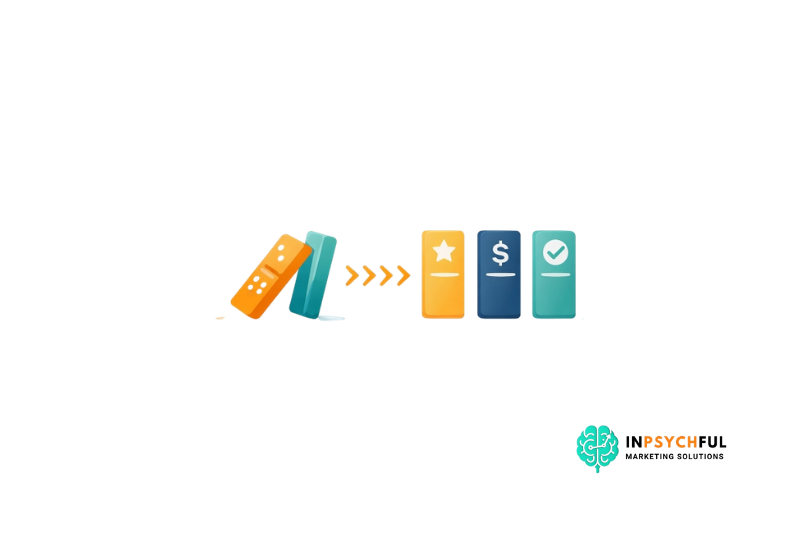
The “Surprise Effect” in marketing is driven by the Von Restorff Effect, also known as the Isolation Effect.
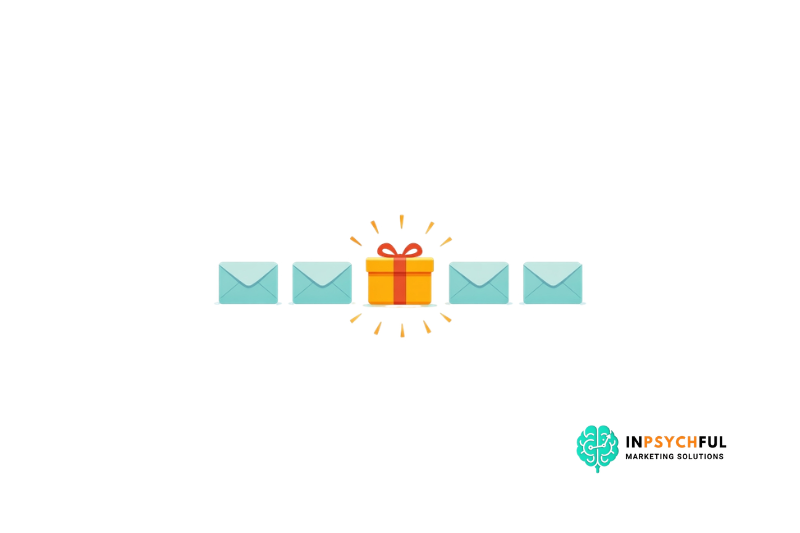
It suggests that when multiple similar objects are present, the one that differs most from the rest is the most likely to be remembered (Restorff, 1933).
By introducing unexpected elements into a customer journey, brands can trigger dopamine release and significantly increase memory retention and engagement.
The Neuropsychology of the Unexpected
Human attention is a finite resource. To conserve energy, the brain filters out repetitive or predictable stimuli, a process known as sensory adaptation.
However, when a pattern is broken by a “surprise,” the brain’s orienting response is triggered.
This biological reaction shifts the brain from “autopilot” to “active processing.”
Neurologically, surprise activates the nucleus accumbens, the brain’s pleasure center, which releases dopamine (Berns et al., 2001).
This chemical surge not only makes the experience pleasurable but also acts as a “save” button for memory, ensuring the surprising event is encoded more deeply than the surrounding routine information.
The Von Restorff Effect: Why We Remember the Outlier
In 1933, Hedwig von Restorff discovered that distinctiveness is a primary driver of recall.
In a marketing context, if every competitor in a niche uses the same color palette, tone of voice, and advertisement structure, they become a single “background” stimulus.
The brand that introduces a “surprising” deviation becomes the isolation point. This creates a psychological “anchor” in the consumer’s mind.
Research indicates that items that stand out are not only remembered better but are also perceived as more valuable or significant (Hunt, 2006).
Key Drivers of the Surprise Effect:
- Novelty: Introducing a concept or visual that the user has never encountered in that specific context.
- Expectation Violation: Deliberately leading a user toward a predictable conclusion and then pivoting to a different, more rewarding outcome.
- The “Easter Egg” Strategy: Hiding small, delightful rewards within a standard process, such as a thank-you page or a shipping confirmation.
Applying Surprise to the Customer Journey
Strategic surprise is most effective when applied to points of the journey that are traditionally boring or high-friction.
- Onboarding and Education: Replacing standard “How-To” text with an interactive or unexpectedly humorous element can reduce the cognitive load of learning a new system.
- The “Peak-End” Rule: People judge an experience largely based on how they felt at its peak and at its end (Kahneman, 2011). Introducing a surprising “bonus” at the end of a transaction can retroactively improve the user’s entire perception of the brand.
- Retention Campaigns: Standard “We miss you” emails are often ignored. A surprising, data-backed insight about the user’s own behavior or a “just because” reward can break the pattern of the inbox and re-establish a connection.
The Ethical Boundary: Delight vs. Shock
There is a distinct difference between “surprising” a customer and “shocking” them.
Surprise should lead to a positive discovery that aligns with the brand’s value proposition. Shock, or “clickbait,” often violates the psychological contract between the brand and the user, leading to distrust.
True “InPsychful” marketing uses surprise to reward attention.
The goal is to make the customer feel seen and valued by providing a moment of unexpected utility or joy.
3-Step Audit for Surprise Opportunities
- Identify the “Dead Zones”: Where in the customer journey is the engagement the lowest? These are the prime areas for an unexpected “pattern interrupt.”
- Define the Category Norm: List the top three things every competitor is doing. Identify which one of these norms can be safely broken to create an isolation effect.
- Measure the Dopamine Hit: Use GA4 metrics like “Average Engagement Time” to see if surprising content actually keeps users on the page longer compared to standard information.
References
Berns, G. S., McClure, S. M., Pagnoni, G., & Montague, P. R. (2001). Predictability modulates human brain response to reward. Journal of Neuroscience, 21(8), 2793, 2798.
Hunt, R. R. (2006). The concept of distinctiveness in memory research. Distinctiveness and Memory, 3, 25.
Kahneman, D. (2011). Thinking, Fast and Slow. Farrar, Straus and Giroux.
Restorff, H. (1933). Über die Wirkung von Bereichsbildungen im Spurenfeld (The effects of field formation in the trace field). Psychologische Forschung, 18(1), 299, 342.