Quick Answer:
The Zeigarnik Effect is a psychological phenomenon stating that people remember uncompleted or interrupted tasks better than completed ones (Zeigarnik, 1927).
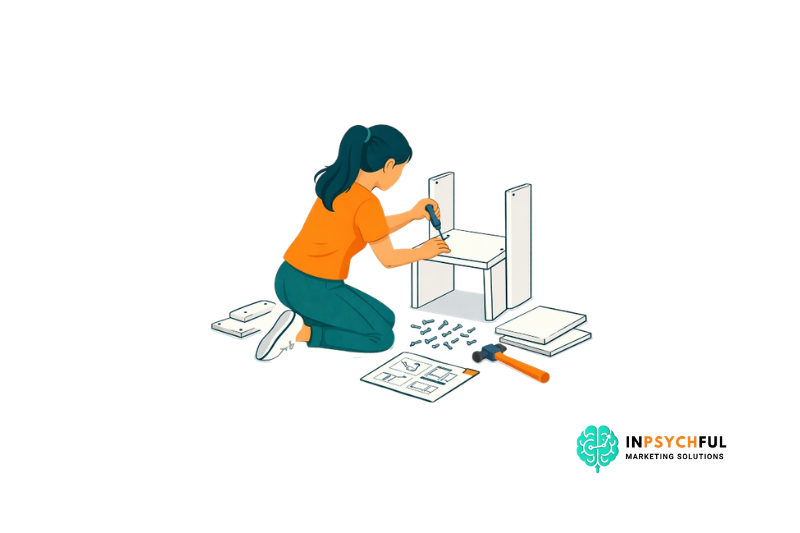
When a task is started but not finished, it creates a state of Psychic Tension.
This tension acts as a cognitive “open loop” that requires mental energy to maintain, compelling the individual to seek closure to relieve the cognitive burden.
The Discovery of “Cognitive Loops”
The effect was first observed by psychologist Bluma Zeigarnik in the 1920s.
She noticed that waiters had better memories of unpaid orders than those that had already been settled.
Once the bill was paid (the task was completed), the waiters “cleared” the information from their working memory.
From a neurological standpoint, an unfinished task remains “active” in the Prefrontal Cortex.
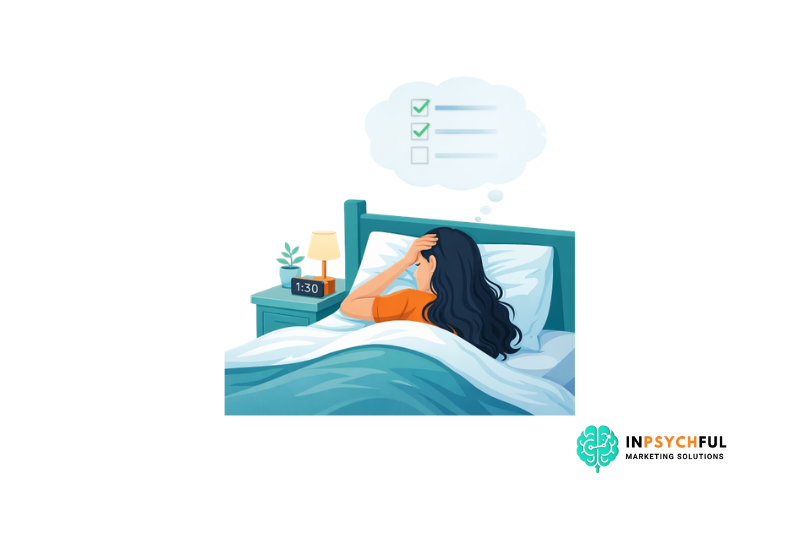
The brain treats an incomplete goal as a priority, constantly rehearsing the information to ensure it is not lost.
This results in Intrusive Thoughts about the task, which only dissipate once the “loop” is closed through completion (McGraw & Fiala, 1982).
The Ovsiankina Effect: The Urge to Resume
A related concept, the Ovsiankina Effect, suggests that the interruption of a goal-directed task creates a “quasi-need” to resume it (Ovsiankina, 1928).
This is why users feel a physical or emotional pull to return to a half-finished profile setup or a partially watched video.
The Progress Bar Phenomenon: Digital interfaces use progress bars to visualize the “gap” between the current state and the completed state.
The Endowment Effect of Effort: Once a user has invested even a small amount of time into a task, they value the “completion” of that task more highly. Leaving it unfinished feels like a “loss” of the effort already spent (Arkes & Blumer, 1985).
Engagement Science: Creating the “Open Loop”
Strategic marketing operations use the Zeigarnik Effect to maintain long-term engagement and reduce churn:
The “Cliffhanger” in Content: Email subject lines or video intros that pose a question without an immediate answer create an open loop. The reader’s brain seeks the “missing” information to resolve the tension, leading to higher open and click-through rates.
Gamified Onboarding: By showing a user they are “70% complete” with their account setup, brands leverage the Zeigarnik Effect. The remaining 30% acts as a persistent cognitive itch that the user wants to scratch.
Low-Friction Starting Points: The hardest part of any task is initiation. By making the first step of a process incredibly easy (e.g., “Enter your email to start”), brands “hook” the user into a cognitive loop that they are then psychologically driven to finish.
The Risk of Cognitive Overload
While “open loops” are powerful for engagement, too many unfinished tasks lead to Cognitive Overload and stress (Sweller, 1988). If a brand leaves too many loops open without providing a clear path to closure, the user may experience “Task Paralysis” and abandon the brand entirely to find mental relief elsewhere.
The Bottom Line
The human brain is evolutionarily programmed to seek closure.
By understanding the Zeigarnik Effect, organizations can design user journeys that feel “unfinished” in a way that motivates action, rather than “incomplete” in a way that causes frustration.
Success lies in creating the tension of a beginning and providing the satisfaction of an end.
References
Arkes, H. R., & Blumer, C. (1985). The psychology of sunk cost. Organizational Behavior and Human Decision Processes, 35(1), 124, 140.
McGraw, K. O., & Fiala, J. (1982). Undermining the Zeigarnik effect: Another hidden cost of reward. Journal of Personality, 50(1), 58, 66.
Ovsiankina, M. (1928). Die Wiederaufnahme unterbrochener Handlungen. Psychologische Forschung, 10(1), 302, 379.
Sweller, J. (1988). Cognitive load during problem solving: Effects on learning. Cognitive Science, 12(2), 257, 285.
Zeigarnik, B. (1927). Das Behalten erledigter und unerledigter Handlungen. Psychologische Forschung, 9(1), 1, 85.